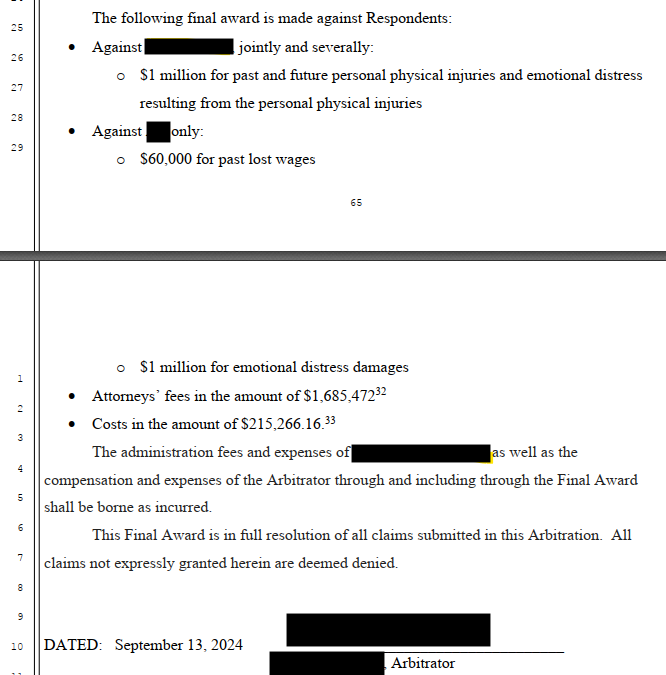
EXAMPLES OF HARASSMENT IN THE WORKPLACE
Every employee deserves to work in a safe environment. However, if you have been dealing with a fellow employee or employer who makes racial stereotypes, sexual jokes, unwanted sexual advancements, or another type of harassing remark that has created a hostile work environment, it may be time for legal intervention.
A few examples of the types of harassment which are not acceptable in the workplace include harassment based upon:
- Age, such as offensive comments about one’s age or being passed up for promotion to due to one’s age
- Disability or medical condition, such as being bullied or verbally harassed about one’s disabilities
- Gender, such as being the target of negative stereotypes about men’s and women’s roles
- Religion, such as cruel jokes about one’s religion or pressure to convert an individual
- Race, such as racial slurs or jokes
- Sexual orientation, such as repeated unwanted inquiries about one’s sexual orientation
Our San Bernardino workplace harassment attorney can help you whether it is an employee or employer who is making you feel unsafe. We understand that you may be worried about retaliation, which is why retaining strong legal counsel is essential.
What should I do if I’ve been harassed at work?
If you’re a victim of workplace harassment in California, it’s crucial to take action to protect your best interests. You have the option to file a complaint against the perpetrator through the California Civil Rights Department (CRD) either online or offline. In addition, the Federal Equal Employment Opportunity Commission (EEOC) is responsible for enforcing federal anti-discrimination laws, and its website provides guidance on filing complaints.
It’s worth noting that complaints lodged with CRD or EEOC are automatically cross-filed with the other agency, thus requiring only one complaint. Once you’ve filed a complaint, your case will be examined, and the accused party will be asked to respond. CRD and EEOC will review the response.
The case will be sent to the legal division for mediation and a possible lawsuit if an unsatisfactory response is received and if the law was violated. By taking these steps, you are not only safeguarding your rights as an employee, but you’re also holding employers responsible for any illegal discrimination. Remember, consulting a knowledgeable attorney could be a crucial step in this process. If you plan to take legal action against workplace harassment, now is the time to contact a San Bernardino attorney.
When is the Employer Liable?
California law places a duty on employers to prevent and address workplace harassment. Under the Fair Employment and Housing Act, an employer can become legally responsible for harassment committed by supervisors, coworkers, customers, vendors, or other third parties in the workplace.
The extent of an employer’s liability depends on who committed the harassment. When a supervisor engages in harassment, the employer may face direct liability because supervisors act on the company’s behalf. A company could still be liable for the behavior of other employees or even third parties, but there has to be some evidence that management knew or should have known about what was going on.
Employers cannot simply ignore complaints or perform superficial investigations. The law requires companies to take reasonable steps to prevent harassment and stop misconduct before it continues. Written policies alone do not automatically protect an employer from liability if management fails to enforce those policies in practice.
Many workplace harassment cases involve more than offensive comments or inappropriate behavior. Victims often experience lost job opportunities and even pressure to leave their jobs entirely. When an employer allows harassment to continue, the company could be on the hook for the financial and emotional damage that follows.
What Happens if You Experience Retaliation?
California law also prohibits retaliation against employees who report workplace harassment or participate in an investigation. A worker does not lose legal protection simply because they spoke up about misconduct.
Retaliation can come in many different forms. Some employers reduce hours, demote employees, reassign them to undesirable shifts, or terminate employment after a complaint is made. There are also times when acts of retaliation are more subtle, like when workers are excluded from meetings or lose out on a chance for advancement.
When it comes to allegations of retaliation, timing is important. If negative treatment begins soon after a harassment complaint, the courts could look at that as evidence of retaliation.
It is important to remember that employees do not have to prove the original harassment claim succeeded in order to pursue retaliation damages. The law prevents employers from retaliating against complaints regardless of whether they are ultimately successful or not.
Schedule A Free Consultation

 facebook
 Instagram
 Twitter
 Linkedin
 Youtube
 Tiktok


 600+ Google Reviews