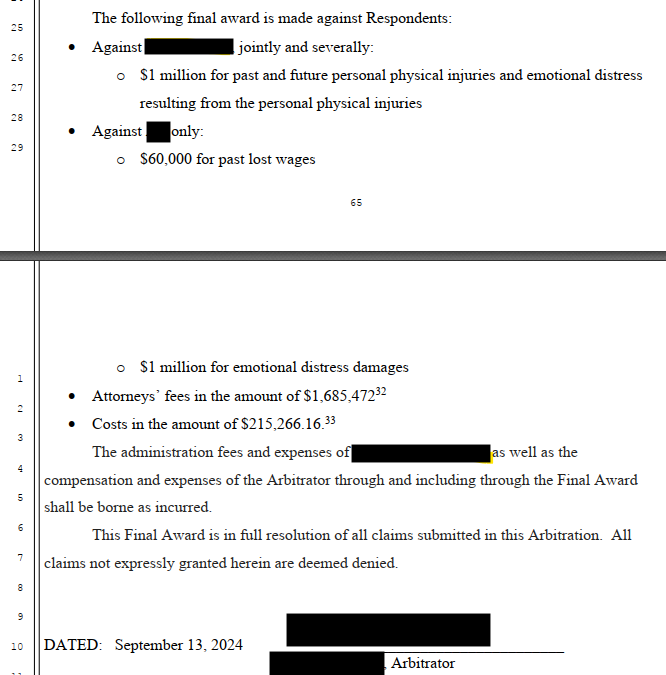
Non-Economic Damages in a Personal Injury Claim
Non-economic damages refer to unquantifiable losses as a result of injuries. The compensation is based on the following:
- Emotional distress
- Pain and suffering
- Loss of enjoyment
- Physical scarring
- Permanent impairment
Although financial damages cannot compensate for life-altering injuries, they can ease the mental, emotional, and physical burdens so that an individual can focus on recovery. Working with one of our personal injury attorneys in Los Angeles could help protect a person’s rights to compensatory damages.
Will a Case Have Punitive Damages?
Punitive damages are not the same as compensatory damages. While compensatory damages are part of most Los Angeles personal injury lawsuits, punitive damages penalize responsible parties for egregious negligence. Judges and jurors may award punitive damages in addition to economic and non-economic damages for actions such as drunk driving or willful neglect.
How are Damages Calculated?
To calculate compensatory damages in a personal injury case, our experienced Los Angeles lawyer tallies economic losses, measures non-economic losses, and adjusts for the victim’s percent of fault.
Adding Economic Costs
Economic damages cover specific monetary losses, making them easiest to calculate. An attorney will add the costs of medical expenses, property damage, lost wages, future expenses, and other out-of-pocket costs (such as transportation to medical appointments). Hard evidence, such as receipts, medical bills, and invoices, can be used to create an airtight case proving economic damages.
Calculating Non-Economic Costs
Non-economic damages are more complex and require an attorney’s knowledge and experience to accurately determine a fair amount based on the client’s injuries and other factors. Insurance companies may multiply a victim’s economic damages by a number between 1 and 5 (depending on the severity of damages). However, insurance companies typically aim to minimize the amount they pay to accident victims.
Our lawyers draw on experience and testimony from medical professionals to accurately calculate non-economic damages. Compensation for pain and suffering for minor injuries is calculated by multiplying the cost of economic damages by 1.5 or 2. Severe or permanent injuries cause long-term trauma and are more likely to be multiplied by 4 to 5 to reflect increased suffering. When the multiplier method is not suitable, non-economic compensation may be calculated as a daily rate for each day until recovery or in a lump sum assigned by a judge based on the nature of the injury, recovery time, and the injury’s impact on the plaintiff’s life.
Considering Comparative Fault
In some cases, the injured party may be partially responsible for the incident that caused their injury. California’s pure comparative negligence rule allows victims to collect damages for injuries even if they are partly at fault. However, damages are reduced by the victim’s percentage of fault. The final part of calculating compensatory damages requires the full amount of damages to be reduced by the victim’s percentage of fault.
Personal Injury Statute of Limitations
Injured parties have two years from the date of the accident to file a personal injury lawsuit unless the lawsuit involves a government entity. In those situations, the statute of limitations is six months. However, accident victims should contact a knowledgeable lawyer promptly to ensure valuable evidence is not lost.
For example, witnesses can relocate, accident scenes can change, and documents may be misplaced. Recreating accidents, locating witnesses, and resurrecting documents takes time and potentially delays settlement. In some instances, crucial information may not be recoverable, impacting final awards.
Evidence in Personal Injury Cases
Although evidence can vary depending on the accident, most cases use the following information:
Official Reports
If law enforcement is involved, an official report should be filed that covers the accident scene, participant names and addresses, and witness contact information. This report can form the basis of a personal injury claim.
Witness Statements
Witnesses provide a third-party perspective of an accident. Their focus may highlight aspects that participants overlook. Even though official reports may contain contact details, injured parties should try to collect the information at the scene.
Medical Records
Regardless of the type of accident, people should seek medical attention even if there are no apparent injuries. Not all symptoms appear immediately, but they may be detected by a medical professional to minimize health risks. If ongoing treatment is needed, electronic medical records should contain detailed information about expenses.
Get Started Today 

 facebook
 Instagram
 Twitter
 Linkedin
 Youtube
 Tiktok


 600+ Google Reviews