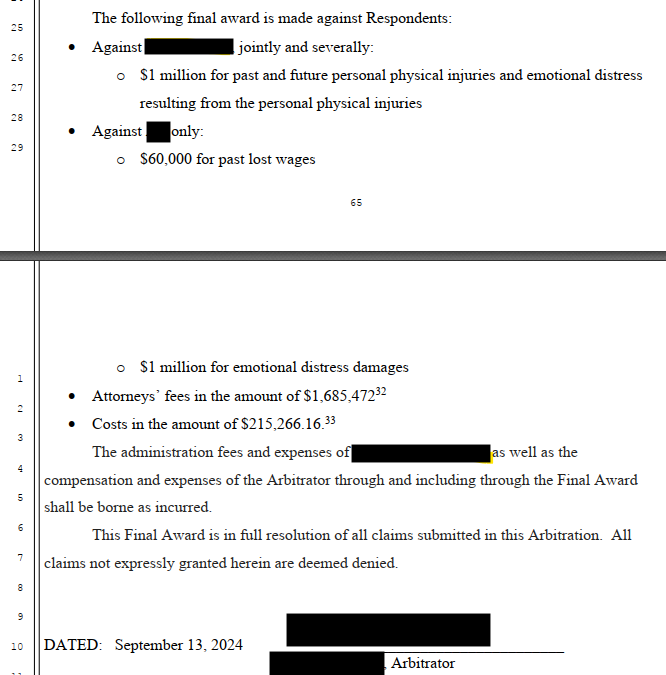
Negligence and Damages Awards
All drivers have a duty to drive safely and not put others at risk of injuries from reckless or careless acts. One duty is to abide by the drunk driving statutes. Alcohol is a known depressant that alters reaction time in the event of an impending crash. If a drunk driver causes an accident, they could be liable for the injured party’s:
- Current and future medical care related to the accident
- Lost wages
- Property damage, particularly to the injured party’s vehicle
- Emotional trauma
- Psychological trauma for loss of enjoyment of life, consortium, limbs, senses, enjoyment of family, and lifelong suffering for living with disfigurement or disability
Our attorneys believe a drunk driver should pay to put the client in as close a position as possible to their life before the accident. We fight to win that. Life may never be exactly the same, but bad actions should have consequences, and injured parties should be compensated by an insurance settlement or damages awarded in a lawsuit after drunk driving car collisions in Los Angeles.
Punitive Damages May Be Available
Punitive damages are like a fine a judge imposes on a defendant in a civil case to punish bad behavior. The plaintiff receives the extra money. Punitive damages are meant to serve as a punishment and deterrent, so the amount is not based on the defendant’s financial position nor the plaintiff’s documented damages.
A judge will not allow a jury to consider punitive damages unless you ask for them in your legal filings. California Civil Code § 3294 requires you to prove that you are entitled to punitive damages by clearly demonstrating that the defendant acted with malice or gross negligence.
Many personal injury cases never go to trial, so punitive damages are not on the table. However, when there is evidence that could support a claim for punitive damages, our Los Angeles attorneys could use the possibility in their negotiating strategy to obtain a more generous settlement in a drunk driving accident.
Negligence Per Se in Drunk Driving Crash Suits
Negligence per se is a doctrine that simplifies the lawsuit process when the responsible party is ticketed or charged with a crime under state law. Negligence suits require attorneys to prove another had a duty to act responsibly, failed in that duty, caused an accident, and someone was injured because of it.
Negligence per se assumes the bad actor was negligent because they broke the law. Under this doctrine, all a person must prove is that they were injured in the process.
What If a Crash Is Fatal?
Tragically, drunk driving accidents sometimes kill innocent people. The drunk driver often faces criminal charges. Regardless of the outcome of a criminal case, families can hold drunk drivers liable for the death of their loved one in civil court by bringing a wrongful death lawsuit.
A surviving spouse or child is usually the plaintiff in a wrongful death case. When the accident victim did not leave a spouse, child, or grandchild, other family members may have the right to bring a lawsuit against the drunk driver. Our Los Angeles attorneys could review a specific situation and determine who has standing to sue in a specific fatal drunk driving accident.
The heirs can receive the value of the deceased person’s financial and other contributions to the household. Funeral expenses are included in wrongful death damages. Heirs can also receive compensation for the loss of their loved one’s guidance, protection, affection, and companionship.
A Survival Action May Also Be Possible
If the accident victim did not die instantly, their estate can bring a survival action. These lawsuits seek compensation for the deceased person’s medical expenses related to the fatal accident, their lost income between the time of the incident and the date of their death, and property damaged in the accident. Punitive damages are not available in wrongful death lawsuits but are possible in survival actions.
In a wrongful death lawsuit, the proceeds go directly to the plaintiffs, but in a survival action, proceeds are paid into the estate. The money can be used to pay the estate’s debts. Once the probate process is complete, the estate’s personal representative distributes any funds remaining according to the deceased person’s will or the laws of intestacy if there is no will.
Get Started Today

 facebook
 Instagram
 Twitter
 Linkedin
 Youtube
 Tiktok


 600+ Google Reviews